Best Games

Batman: The Enemy Within
Cute Girl
Fortress Defense
Kill The King

Rescue Kingdom

Ninja Rabbit

Minecraft Wars

King Way

Knight Dash

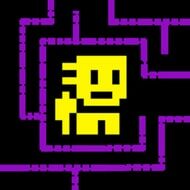
Tomb Of The Mask is a fast-paced maze action game built around constant movement, sharp reflexes, and quick decision-making. Players control a masked character who slides rapidly through vertical labyrinths filled with traps, enemies, and collectibles. Tomb Of The Mask focuses on momentum and precision, creating intense sessions where hesitation often leads to failure and confident movement is the key to survival.
The defining feature of Tomb Of The Mask is its movement system. The character does not move step by step but instead slides instantly in a chosen direction until hitting a wall. This creates a continuous flow where every move must be planned in advance. Players must think several steps ahead, as a single wrong direction can lead directly into danger.
Each maze in Tomb Of The Mask is designed to challenge both memory and reaction speed. Traps such as spikes, moving hazards, and closing walls force players to act quickly while still choosing safe routes. Layouts often include narrow passages that punish poor timing.
Enemies add constant pressure by blocking paths or chasing the player through the maze. Unlike static hazards, enemies react to movement, forcing players to adapt on the fly. Avoiding them often requires using walls, corners, and speed to escape rather than direct confrontation.
Collectibles scattered throughout levels encourage exploration but also introduce risk. Reaching certain items may require dangerous detours through trap-filled sections. Players must constantly decide whether the reward is worth the danger, especially as levels become more complex.
As players advance, Tomb Of The Mask increases difficulty by combining hazards, enemies, and tighter layouts. Reaction windows become shorter, and mistakes are punished more severely. Progression rewards improved pattern recognition and faster planning rather than brute-force repetition.
Experienced players develop habits that improve consistency. Learning common maze patterns helps predict danger zones, while controlled movement reduces panic. Using short slides instead of long risky movements often prevents unexpected deaths.
Players often ask whether speed or caution matters more in Tomb Of The Mask. While fast reactions are essential, controlled movement and anticipation usually lead to better results. Rushing without planning often results in unavoidable traps.
Tomb Of The Mask delivers an intense and skill-focused experience built around momentum, precision, and quick thinking. Its maze-driven design and constant pressure create a game that rewards focus, practice, and the ability to stay calm while moving at high speed.